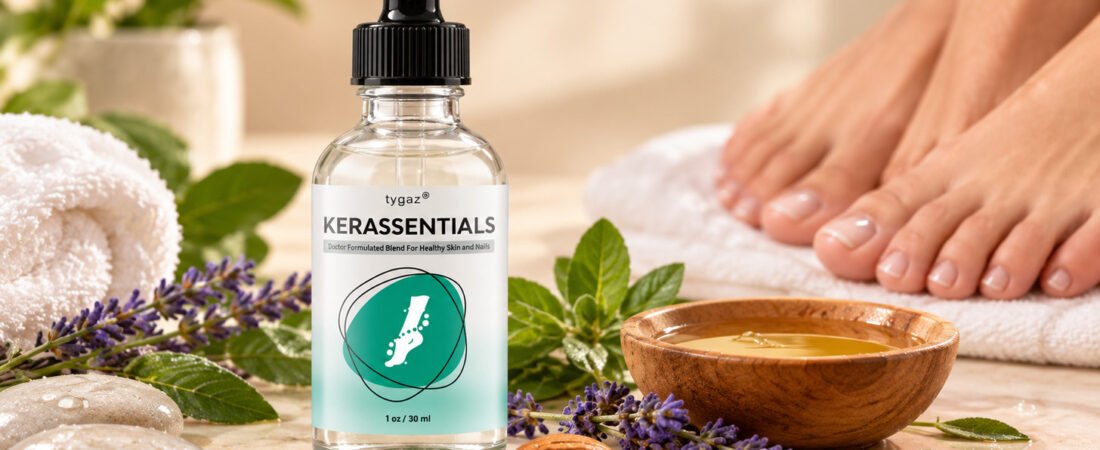
Kerassentials is a topical nail oil, but its claims need to be weighed against the evidence and your needs. A nail change can feel small at first, yet it may affect comfort and confidence. Marketing claims and testimonials do not prove that a treatment works.
Onychomycosis is a fungal infection of the nail, commonly called nail fungus. In this review, I assess the formula, evidence, expected results, side effects, and cost. A careful look can help you decide whether the product fits your needs or whether a clinical assessment makes more sense. 👉 Get Kerassentials From Official Website
Key Takeaways
- Kerassentials is an oil serum for nails and nearby skin.
- Ingredient claims do not prove the finished product treats toenail fungus.
- The stated routine calls for four daily applications for 9-12 weeks.
- Damaged toenails can take 12-18 months to grow out fully.
- Check the current price and 60-day money-back guarantee terms before paying.
My assessment begins with what the oil is intended to do, rather than treating its claims as established results.
What Does This Kerassentials Review Tell Me About the Product?
Kerassentials is a liquid oil serum applied to nails and the nearby skin. Its brush applicator is intended for toenails and fingernails, as well as the surrounding nail skin. That format makes it a topical care product, not a pill or a medical procedure.
The product is meant to support nail and skin care while addressing fungal nail concerns. Intended use does not establish that the serum cures toenail fungus. A product’s purpose and its proven effect are separate questions.
A topical oil’s intended use does not prove that it cures toenail fungus.
What the formula is intended to do
The serum is designed for direct use on the nail plate and nearby skin. The company presents it as a way to care for nails and address concerns linked to fungus. That description tells you where the product goes and what it aims to do.
Topical care may appeal to someone who wants a product applied at home. The intended use includes both toenails and fingernails. It does not mean the product has been shown to work equally well on either type of nail.
Nail health can involve more than the visible surface. A nail may look thick, brittle, or discolored for several reasons. A topical serum cannot identify the cause of those changes.
What its intended use does not establish
A fungal infection needs to be distinguished from other nail problems. A clinician can assess the nail and decide whether testing or treatment is appropriate. The product’s label cannot replace that diagnosis.
Prescription treatment may be considered when a fungal infection is confirmed. Such care differs from general topical skin care and may need professional guidance. I would not treat the serum’s intended use as proof of a cure or as a substitute for prescribed care.
The formula’s listed ingredients help explain the product’s claims, but each ingredient’s role needs its own careful reading.
What Ingredients Are in Kerassentials?
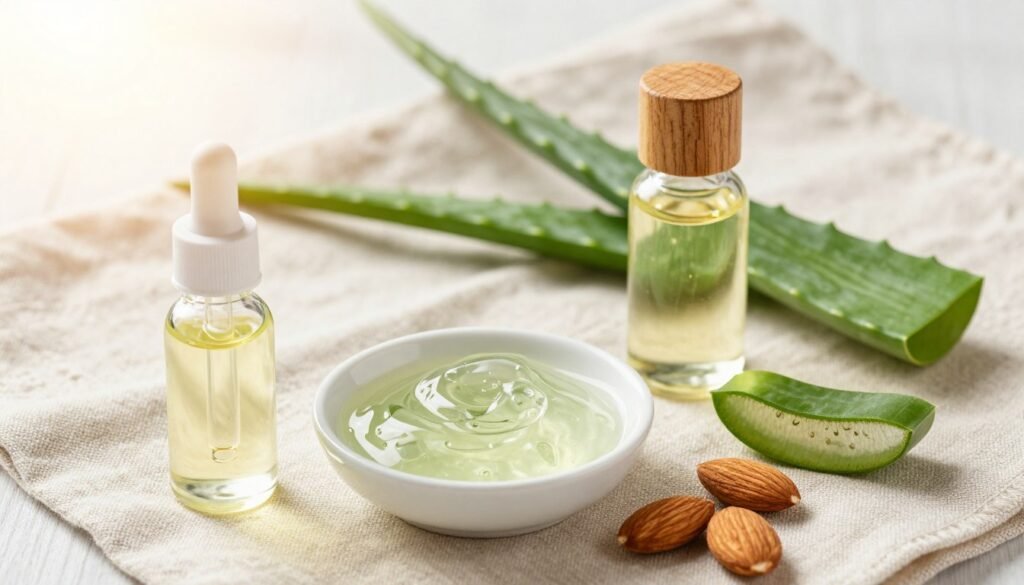
The formula combines essential oils with moisturizing oils and other ingredients. The listed ingredients include tea tree oil, lavender oil, lemongrass oil, clove bud oil, and manuka oil. Their presence describes the blend, not a proven medical effect.
Other listed ingredients include almond oil, flaxseed oil, chia seed oil, aloe vera, jojoba, undecylenic acid, menthol, tocopheryl acetate, and isopropyl palmitate. A commonly claimed ingredient use does not establish that the finished blend works.
Essential oils in the formula
Tea tree oil and lavender oil are among the named essential oils. Lemongrass, clove bud, and manuka oils are listed too. These ingredients are often linked with topical care, but their presence alone cannot show that the product treats a fungal infection.
People can react to oils even when a product uses natural ingredients. Check the full label for oils or other ingredients that have caused you sensitivity before.
Oils and extracts for moisturizing
Almond oil, flaxseed oil, chia seed oil, jojoba, and aloe vera are also listed. The formula’s descriptions may associate these ingredients with skin conditioning or moisture. Those roles do not show that the serum can clear a nail infection.
A nail and the skin around it are different tissues. A product’s skin-care role does not automatically mean it can reach or change the affected part of a nail. That distinction matters when judging claims about toenail fungus.
Other listed ingredients to check
The list also names undecylenic acid, menthol, tocopheryl acetate, and isopropyl palmitate. If you have a known sensitivity, compare it with the complete product label. Do not assume that a familiar oil makes every other ingredient safe for you.
| Ingredient | Role described for the formula | What that role does not prove |
|---|---|---|
| Tea tree oil | Essential oil for topical care | That the blend clears nail fungus |
| Lavender oil | Essential oil in the blend | That it treats an infection |
| Almond oil | Moisturizing oil | That it repairs an infected nail |
| Flaxseed oil | Oil used for skin conditioning | That the serum restores a nail |
| Aloe vera | Skin-care ingredient | That the finished formula cures fungus |
Ingredient roles can help explain why a formula is marketed for nail care. They do not replace evidence that tests the full blend on people with confirmed infection.
Does the Evidence Support Kerassentials for Toenail Fungus?
Research on one ingredient is different from evidence that the complete formula treats toenail fungus. That gap matters because a finished product can act differently from one oil studied alone. Ingredient research by itself does not prove that Kerassentials cures nail fungus.
Laboratory or in-vitro findings examine ingredients under controlled conditions, often outside the human body. They may help researchers ask questions about an ingredient. They do not show that a topical product clears fungal infections in people.
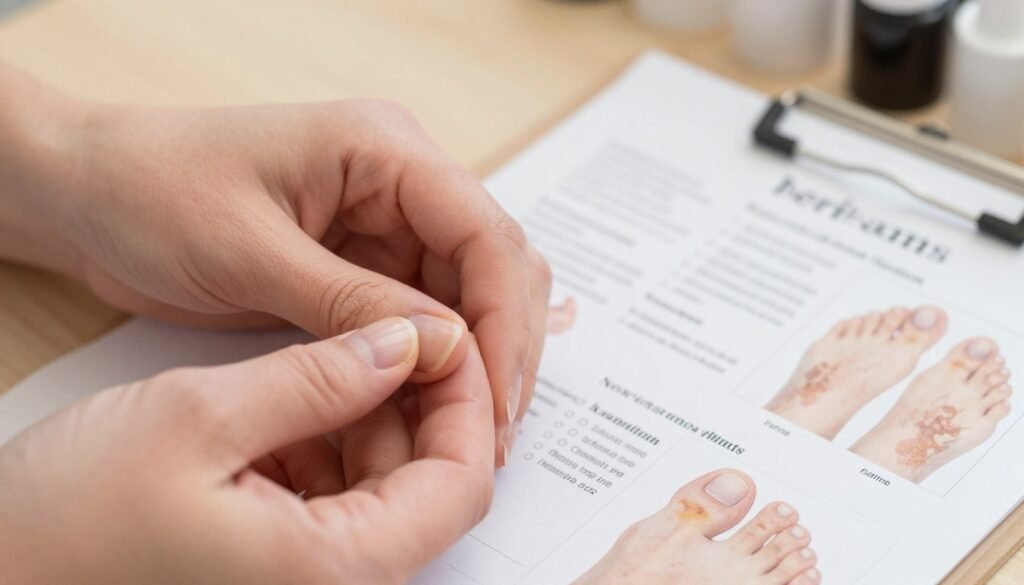
What ingredient research can tell you
An ingredient study can offer clues about a possible action or help guide further research. It cannot establish how the same ingredient behaves in a blend, on skin, or against an infection inside a nail.
Results from a lab also do not show how often someone would need to apply a product. They cannot confirm whether a topical oil reaches the infected area in a living nail. A plausible mechanism is a reason to test a treatment, not proof of a cure.
A product website may explain how an ingredient is expected to work. That explanation can describe a theory, but it is not the same as clinical outcomes. A mechanism can sound convincing without showing that users get better.
What product-level proof would need to show
Useful evidence would test the finished product in people with confirmed nail fungus. It would clearly explain who took part, how the product was used, and what outcome researchers measured.
Clear follow-up would matter too. Nail changes take time to grow out, so a brief check may miss whether an infection has cleared. Results should show what happened to participants over a stated period, rather than rely only on selected stories.
Customer reviews can describe a person’s experience, but they cannot confirm a diagnosis or rule out other causes of change. A website’s description, a testimonial, and a lab result each answer different questions.
Until product-level results are clear, I would treat claims about effectiveness with care. The next practical question is what the stated routine asks a buyer to do each day.
How Do You Apply Kerassentials, and How Long Is the Suggested Routine?
The routine calls for repeated direct application, not occasional use. The product comes with a brush applicator, and the stated schedule is four times a day. That frequency is a real commitment, even when the product seems easy to apply.
Product descriptions suggest using the oil for 9-12 weeks. That is a suggested routine, not a promise that an infection will clear. Follow the label for the directions that apply to your bottle.
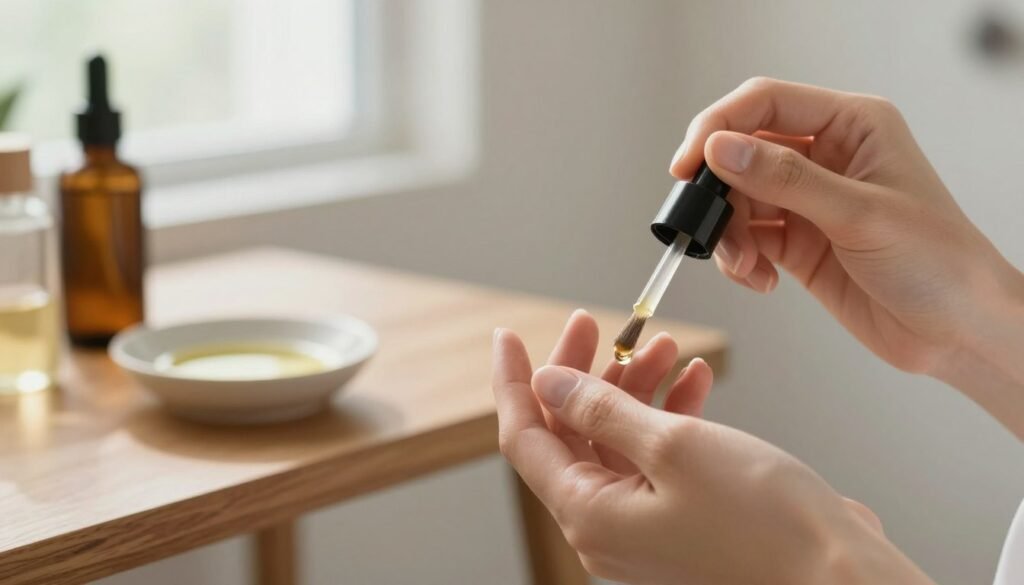
Preparing and applying the oil
Keep the process simple and avoid rough handling of a damaged nail. The stated directions focus on applying oil to the nail and nearby skin. These steps reflect the practical routine described for the product:
- Wash your feet and dry them thoroughly, including between the toes.
- Use the brush to apply oil to the affected nail and nearby skin.
- Follow the stated routine of four applications each day.
- Keep the application area clean after applying the oil.
Do not aggressively file a damaged nail to make the serum seem more effective. Filing can hurt the nail or nearby skin. Do not share nail tools, which can spread germs between people.
Keeping a routine without overpromising
Four applications a day can be hard to fit into work, school, or travel. A reminder may help with consistent use, but missed applications do not justify applying extra oil at once. Stay within the product directions.
A 9-12 week routine describes how long the product is suggested for use. It does not say that a nail will look healthy by the end of that period. A damaged nail may still need time to grow out.
The routine also cannot confirm that the nail problem is fungal. If the nail keeps changing or the skin becomes sore, seek advice rather than extending self-treatment without a clear reason.
Those directions explain how to use the oil, but they do not predict what you will see. Visible change needs a more realistic time frame.
What Results Should You Realistically Expect?
A nail’s appearance can lag behind any change at the nail bed because the damaged part must grow out. Visible progress may take much longer than a few days. A toenail can take about 12-18 months to grow out fully.
Promotional timelines may mention early changes in 1-2 weeks, then improvement over 2-3 months or more. Those ranges are claims, not dependable predictions for each person. A product review or customer story cannot tell you what will happen to your nail.
Brittle nails or a change in color may remain visible while the nail grows. Even if the nail bed improves, the damaged part does not vanish at once. Full regrowth can take about 12-18 months, and that growth period is not proof that an oil worked.
I cannot report personal results because I have not tested the product. I also would not treat unverified testimonials as proof that it can restore nail health. A single customer’s timeline does not establish what others should expect.
To track the same nail, take dated photos in similar lighting and from the same angle. Compare the images over time, rather than judging one day’s appearance. This can make slow changes easier to notice.
Results can be hard to judge when the diagnosis is uncertain. Nail changes may also have causes besides fungus, so a clinician’s assessment can help explain what you are seeing.
That uncertainty makes safety important before putting essential oils on the nail or nearby skin.
What Side Effects and Safety Concerns Should You Know About?
Plant-derived oils are not automatically free of irritation risks. Some people develop skin dryness, mild irritation, or an allergic contact reaction from essential oils. Natural ingredients can still cause side effects.
Skin reactions may include burning, redness, itching, or a rash. Stop using the oil if burning or a rash develops. Do not keep applying it to see whether the reaction gets worse.
Skin reactions to topical oils
Tea tree and other essential oils can irritate skin or trigger an allergy in some people. Aloe vera and other plant ingredients can also bother sensitive skin. A product’s natural label does not predict how your skin will respond.
A small-area patch test may help you spot a reaction before broader use. It cannot guarantee that you will never react later. Follow the product label, and avoid applying the oil to broken skin.
When to stop and ask for advice
Use these safety steps before or during topical care:
- Test a small area of intact skin first, following label directions.
- Stop use if burning, a rash, or worsening irritation appears.
- Avoid applying the oil to cuts, open sores, or broken skin.
- Ask a clinician or pharmacist before combining it with another treatment.
Some signs point beyond a mild skin reaction. Worsening redness, swelling, drainage, or increasing pain around the nail calls for medical advice. These changes may need assessment rather than more topical oil.
If you already use a prescription treatment, ask the prescriber or a pharmacist before adding this product. Do not change prescribed care on your own. A clinician can consider your health and the treatments you use.
Once the safety questions are clear, the listed price and refund conditions become the next practical checks.
How Much Does Kerassentials Cost, and What Does the Guarantee Cover?
 Check Kerassentials Official Website For Special Discount The one-bottle option lists at $69 for a stated 30-day supply. That starting price offers a simple comparison with the larger packages. Listed prices and terms can change, so check them at checkout.
The listed package options show lower per-bottle prices for larger orders. The purchase route presented for the product is the official website. This does not establish that third-party listings are counterfeit or that every seller is the same.
Comparing the listed package prices
The stated supply length grows with the bottle count. A 90-day supply may cover the suggested 9-12 week routine more closely than one bottle, based on the listed supply descriptions. The six-bottle package is described as a 180-day supply.
| Package | Stated supply | Listed total | Listed price per bottle |
|---|---|---|---|
| 1 bottle | 30 days | $69 | $69 |
| 3 bottles | 90 days | $177 | $59 |
| 6 bottles | 180 days | $294 | $49 |
A lower per-bottle price means paying more upfront and receiving more product. It does not mean a larger package is a better choice for every buyer. Consider whether you want that amount before ordering.
Checking the purchase and refund terms
The stated offer is a 60-day money-back guarantee. Its instructions require returning used or empty bottles. That condition matters because buyers may expect a refund without sending the containers back.
Before you buy Kerassentials, read the full return steps and confirm what counts as eligible. Check how the return must be sent, where it goes, and whether any other conditions apply. Do this before paying, not after the return window becomes an issue.
The official website is the purchase site presented for the product, but prices and terms can change. Check the current package total, shipping details, and guarantee language at checkout. The words “money-back guarantee” do not remove the need to follow its return conditions.
Price and refund terms can shape a buying decision, but neither can diagnose a changing nail. Symptoms that worsen may call for clinical assessment instead of self-treatment alone.
When Should You See a Clinician About Nail Changes?
Claim Your Kerassentials Bottle From The Official Store Today A painful nail or one that is getting worse is a reason not to wait on cosmetic care. Changing symptoms can signal a problem that needs assessment. Seek care for pain, spreading redness, drainage, or worsening changes.
Discoloration and thickening can have causes other than toenail fungus. Nail problems can look alike, so diagnosis matters before choosing a treatment. A correct cause helps guide the next step.
Pain, spreading redness, drainage, or worsening nail changes deserve clinical advice, not cosmetic care alone.
Ask for medical advice sooner if you have diabetes, poor circulation, or a weakened immune system. These health issues can affect how well your body handles an infection or skin injury. Do not wait for a nail oil to address a concern that is getting worse.
A clinician can examine the nail and decide whether testing or treatment is appropriate. Testing may help confirm whether fungus is present. This matters because a nonfungal nail problem may need a different approach.
- Pain around the nail or trouble using the toe
- Redness that spreads beyond the nail
- Drainage, swelling, or worsening skin changes
- Diabetes, poor circulation, or a weakened immune system
Prescription options have their own possible risks. Discuss those risks and the expected care with a clinician before starting treatment. Do not assume every option fits every person.
For a mild concern, you may still want an assessment if the change persists. A diagnosis can help you decide whether topical care is suitable or whether established treatment deserves discussion.
The choice comes down to evidence, daily practicality, and your health needs. That is a stronger basis for a decision than a product claim alone.
Conclusion
Kerassentials may be considered as a topical product, not a proven substitute for diagnosis or established care. Its clear routine may suit some readers, but ingredient claims and testimonials alone do not establish treatment effectiveness. That distinction matters when a nail change may have more than one cause.
If changes persist or raise concern, seek a diagnosis before deciding what to use. For a purchase, check the full label and 60-day money-back guarantee conditions first. If symptoms warrant care, book a clinician assessment instead.